
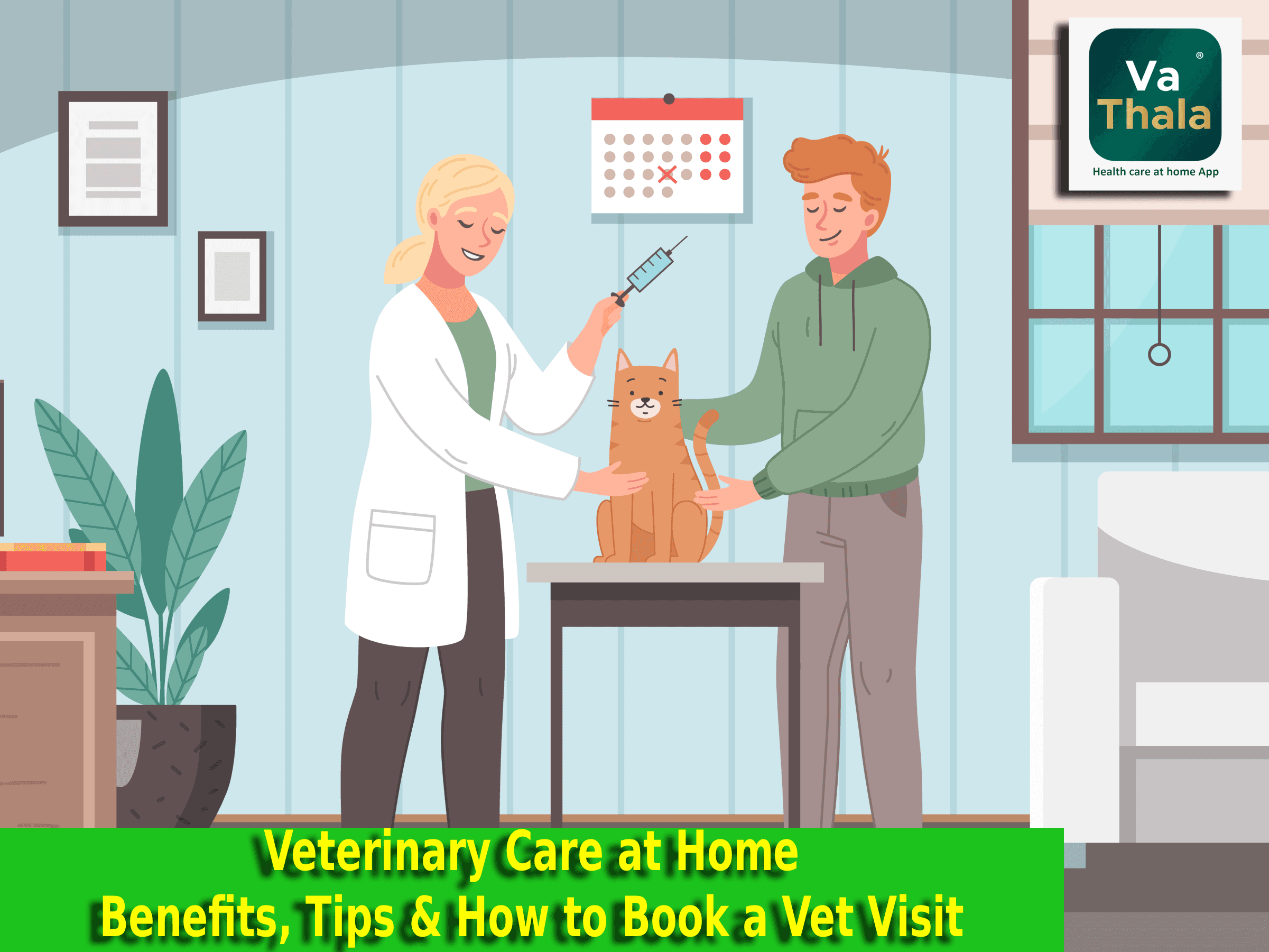
Pets are more than animals they are family. When they fall sick, even a short clinic visit can become stressful, time-consuming, and overwhelming for both pets and owners. That’s why home veterinary care is becoming one of the most trusted and convenient options for pet parents.
This guide covers:
✔ Signs your pet needs a vet
✔ Tips to keep pets healthy at home
✔ How to handle common issues
✔ Why home vet care is rising
✔ How easy booking through apps like VaThala supports modern pet care
Why Veterinary Care at Home Is Becoming Popular
Home vet visits offer comfort, reduced stress, and personalized care right where your pet feels safest.
Benefits of Home Vet Visits
• Stress-free checkups
• No travel or long waiting
• Ideal for anxious or elderly pets
• Safer: no exposure to other sick animals
• More accurate diagnosis (pet stays in natural environment)
• Convenient for busy pet parents
When Your Pet Needs a Home Visit – Important Symptoms to Notice
1. Sudden Tiredness or Body Warmth
If your dog or cat feels unusually warm or is less active, they may have fever or infection.
2. Skin Problems
Rashes, constant scratching, tick infestation, hair loss all need a vet’s attention.
3. Vomiting or Loose Motion
Frequent episodes can be dangerous and require quick assessment.
4. Changes in Eating or Drinking
Skipping food, overeating, or drinking too much water can be warning signs.
5. Ear Issues
Redness, foul smell, head shaking → common signs of infection.
6. Minor Injuries or Wounds
Home vet visits help avoid infections and provide pain relief.
7. Behavioral Changes
Restlessness, aggression, hiding, or crying often indicate discomfort or pain.
8. Difficulty Breathing
Needs immediate medical attention — safer to call a vet home immediately.
How to Keep Your Pet Healthy at Home
These practical, easy-to-follow tips keep your pets safe, strong, and happy.
1. Follow a Proper Nutrition Plan
A balanced diet supports immunity and overall health.
Tips:
• Include protein in every meal (chicken, eggs, fish, paneer)
• Avoid oily, spicy, or leftover food
• Give fruits like apple/banana in small quantities
• Provide clean water throughout the day
2. Maintain Hygiene Regularly
Cleanliness prevents infections.
Suggestions:
• Bathe your pet every 10–15 days
• Brush fur 2–3 times a week
• Trim nails regularly
• Clean paws after outdoor walks
3. Protect Your Pet from Ticks & Fleas
Use doctor-recommended tick collars, sprays, or spot-on solutions.
Common Mistake: Overusing chemical sprays.
Use only what's prescribed for your pet’s age and weight.
4. Keep Vaccinations Updated
Vaccination prevents life-threatening diseases.
Most routine vaccines can be done at home safely.
5. Give Regular Exercise
Daily physical activity helps avoid obesity, digestive problems, and stress.
Suggestions:
• 30–45 minutes walk for dogs
• Playtime with toys for indoor cats
• Avoid overexerting senior pets
6. Monitor Changes Carefully
Pets cannot speak small signs matter.
Watch for:
• Lack of appetite
• Sudden aggression
• Too much sleep
• Scratching/licking excessively
Early detection = faster recovery.
How to Handle Common Pet Health Issues at Home (Before Vet Arrives)
1. Mild Fever
Keep the pet hydrated and comfortable.
Avoid giving human medicines dangerous.
2. Skin Itching
Clean the area with mild antiseptic wipes.
Avoid bathing immediately unless vet suggests.
3. Dehydration
Offer ORS (pet-safe only) or clean water in small amounts.
4. Minor Wounds
Wash with saline → apply vet-approved ointment.
5. Vomiting
Hold food for 6 hours, then give light diet.
If continuing, call a vet.
(Always avoid human medication — extremely harmful)
How VaThala App Fits Into Pet Healthcare
VaThala’s mission is to bring Healthcare closer to home.
Just like families can book:
✓ Home doctor visits
✓ Nursing care
✓ Lab tests
✓ Physiotherapy
…home vet services can be integrated similarly.
With VaThala (future updates), pet parents can:
• Book home vet visits easily
• Get follow-up online consultations
• Maintain digital health records
• Schedule vaccinations
This makes the process simple, modern, and stress-free.
FAQ :
1. What is home veterinary care?
A service where a professional veterinarian visits your home to diagnose, treat, vaccinate, or examine your pet.
2. When should I book a home vet visit?
When your pet has fever, skin allergy, vomiting, injury, appetite loss, or unusual behavior.
3. Is home vet care safe?
Yes, pets feel calmer and more cooperative at home, making treatment safer and easier.
4. Can vaccines be given at home?
Yes, most routine vaccinations can be safely done at home by licensed vets.
5. What common illnesses do pets face?
Skin infections, fever, ear infections, dehydration, digestive issues, ticks, and allergies.
6. How can I keep my pet healthy at home?
Provide balanced diet, hygiene, regular exercise, parasite protection, and timely checkups.
7. Can elderly pets benefit from home vet visits?
Absolutely. Home visits reduce stress and avoid painful travel for senior pets.